
Identity Mesh
Where identities connect.
Unify, synchronize, and govern identities across every system in your environment with watermark-based delta sync and on-premises security.
Delta Sync
Process only what changed with watermark-based change detection (uSNChanged for AD, delta columns for SQL).
Bi-directional Connectors
Seamlessly sync identities in both directions with conflict resolution and authoritative source management.
Policy-based Transforms
Define attribute mappings, transformations, and business rules with a safe transform engine and whitelisted functions.
Audit-ready Reporting
Complete audit trails with before/after values, run history per connector, and a UI-based audit viewer.
How It Works
Connect Sources
Connect Active Directory via LDAP and SQL databases using built-in connectors, with more connectors coming soon.
Normalize & Transform
Apply attribute mappings, business rules, and governance policies to ensure consistent identity data across all systems.
Sync & Audit
Scheduled delta synchronization with complete audit logs and run history for every identity change.
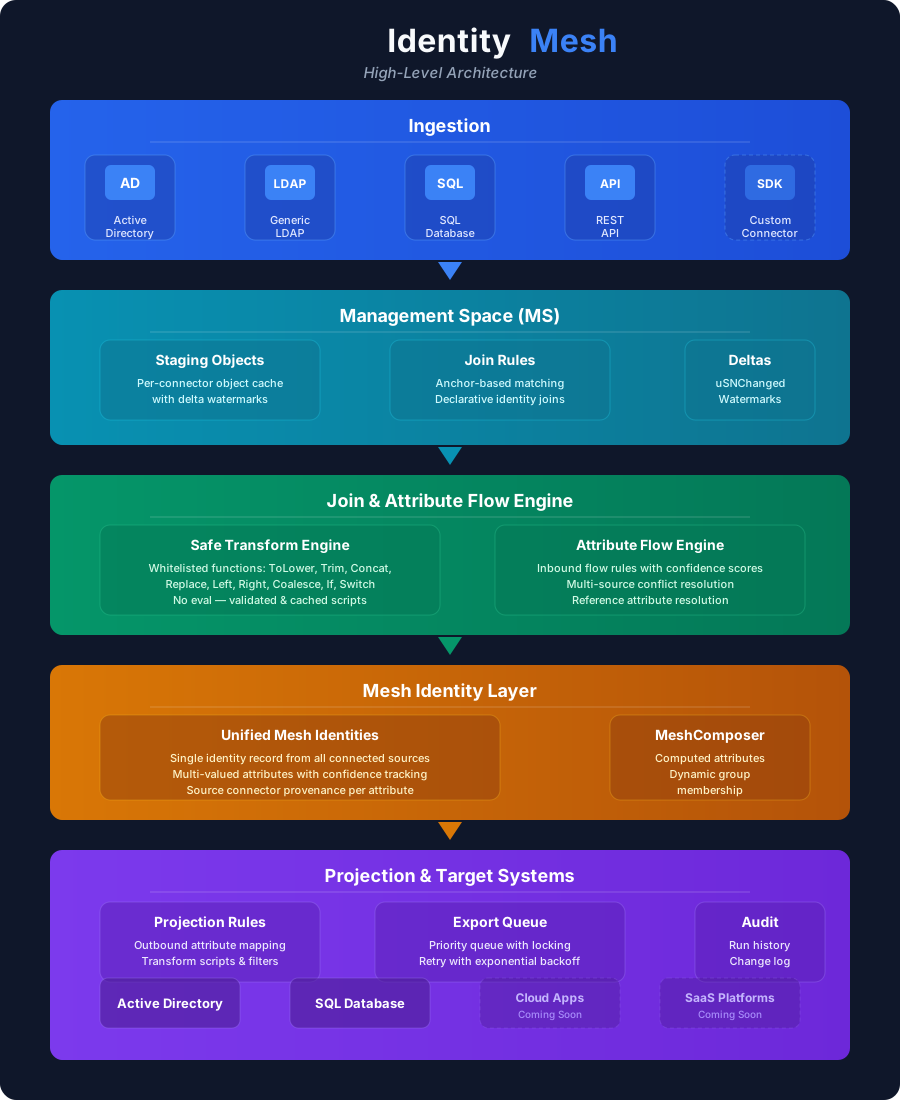
Architecture
Connectors & Agents for all major identity systems
Delta pipeline with real-time change detection
Transform engine with attribute mapping
Policy engine for governance and compliance
Audit log with full history and exports
Enterprise-grade Security
DPAPI-encrypted secrets, TLS for connections
Least privilege access with role-based permissions
On-premises deployment — your data stays in your network
Full audit trails for all identity changes
Comprehensive audit logging with before/after values
RBAC admin console with Windows Negotiate auth
On-Premises Deployment
Identity Mesh runs entirely within your network — your identity data never leaves your infrastructure
Self-Hosted
Windows Service installed via MSI, backed by your own SQL Server database
- Complete data sovereignty
- Air-gapped deployment options
- DPAPI-encrypted secrets and Windows Negotiate auth
- Admin UI and REST API for configuration
Use Cases
AD ↔ SQL Identity Sync
Synchronize user identities between Active Directory and SQL databases with attribute mapping, transforms, and confidence-based conflict resolution.
M&A Identity Consolidation
Consolidate identities across multiple directories during mergers and acquisitions using anchor-based join rules and projection.
HR → AD Provisioning
Flow employee data from HR databases into Active Directory with transform rules for username generation, group assignment, and attribute normalization.
Governance & Audit
Track every identity change with before/after values, run history per connector, and a comprehensive audit trail for compliance support.
Works with Your Existing Infrastructure
Built-in connectors for Active Directory, SQL, and File (CSV/TXT), with more on the roadmap


"Trusted by IAM and security teams"
Leading enterprises rely on Identity Mesh to unify and govern their identity infrastructure across complex, hybrid environments.
FAQ
What systems does Identity Mesh support?
Is synchronization real-time or scheduled?
How do attribute transforms work?
How does Identity Mesh handle conflicts?
What audit and reporting capabilities are included?
Ready to unify your identity fabric?
See how Identity Mesh can transform your identity synchronization and governance.